Product Overview
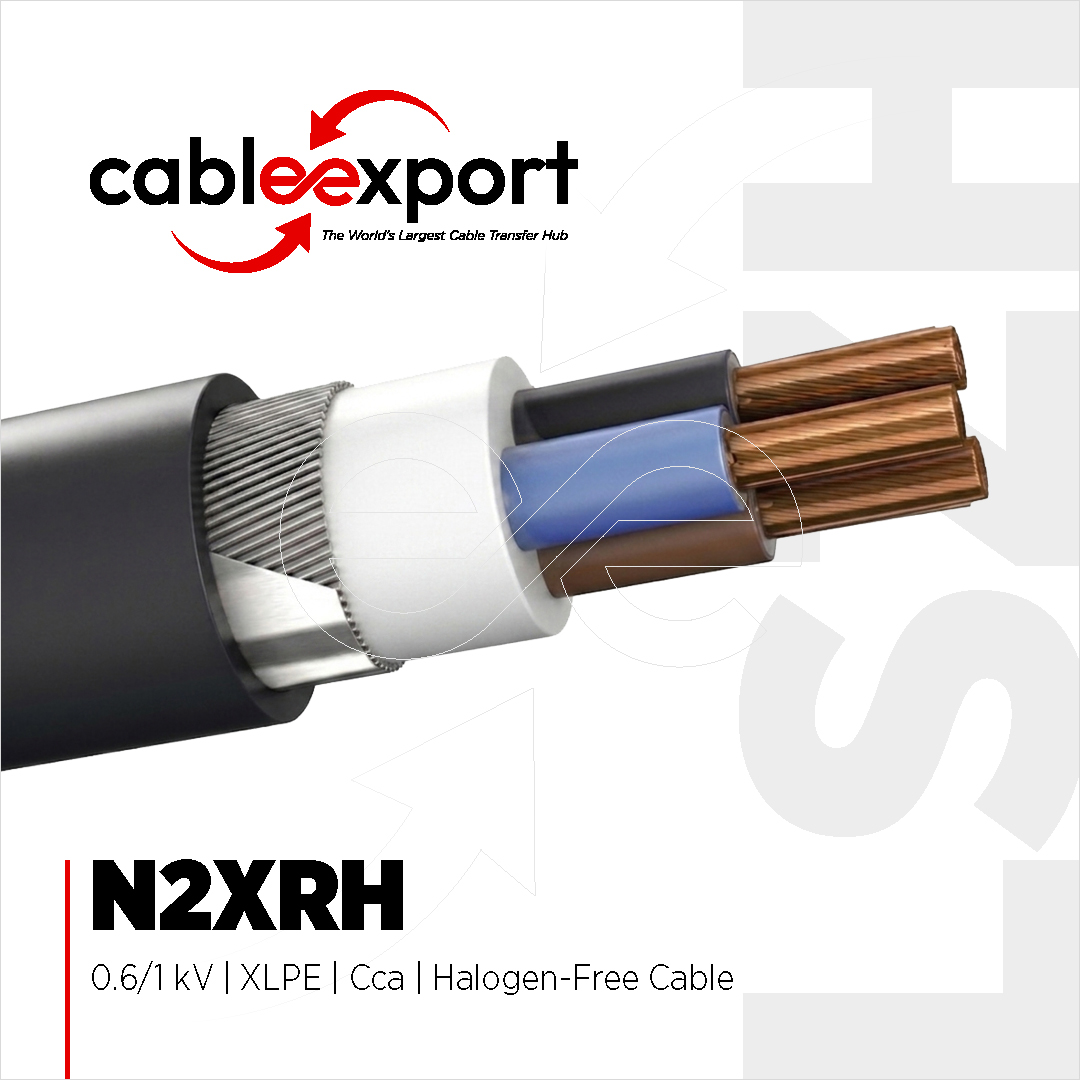
The N2XRH 3×50+25 mm² 0.6/1 kV power cable is a high-performance, multi-core industrial cable designed for fixed installations requiring enhanced mechanical strength and high fire safety standards. Constructed with stranded copper conductors, XLPE insulation, and a robust galvanized steel wire armour, this cable provides exceptional resistance to external mechanical stresses and tensile loads during and after installation. The outer sheath is manufactured from a low smoke zero halogen (LSZH) compound, ensuring minimal smoke emission and no toxic corrosive gases in the event of a fire.
Key Technical Specifications
| Parameter | Specification |
| Cable Designation | N2XRH |
| Conductor Configuration | 3×50 + 25 mm² Multi-core, stranded copper |
| Rated Voltage (Uo/U) | 0.6/1 kV |
| Insulation Material | XLPE |
| Armour Type | Round Galvanized Steel Wire Armour (SWA) |
| Sheath Material | LSZH (Low Smoke Zero Halogen) |
| CPR Euroclass | Eca |
| Applicable Standards | TSEK 339, TS IEC 60502-1 |
Applications & Installation
This armoured power cable is ideally suited for internal and external industrial plants, power stations, switching stations, and local distribution networks. Thanks to the robust round galvanized steel wire armour, the N2XRH cable is fully optimized for underground burial, heavy-duty cable ducts, and areas subject to severe mechanical strain or risk of physical impact. The halogen-free composition makes it an essential choice for enclosed facilities with high concentrations of human activity or sensitive electronic equipment, such as hospitals, data centers, airports, and high-rise commercial buildings, where life safety and asset protection are critical priorities during fire incidents.
Standards & Compliance
Manufactured in strict adherence to recognized national and international electrical standards, the N2XRH 3×50+25 mm² cable complies with TSEK 339 and TS IEC 60502-1 specifications. The product meets the Construction Products Regulation (CPR) requirements under Euroclass Eca, verifying its flame retardancy and reaction-to-fire performance for global trade and international engineering projects.