
Product Overview
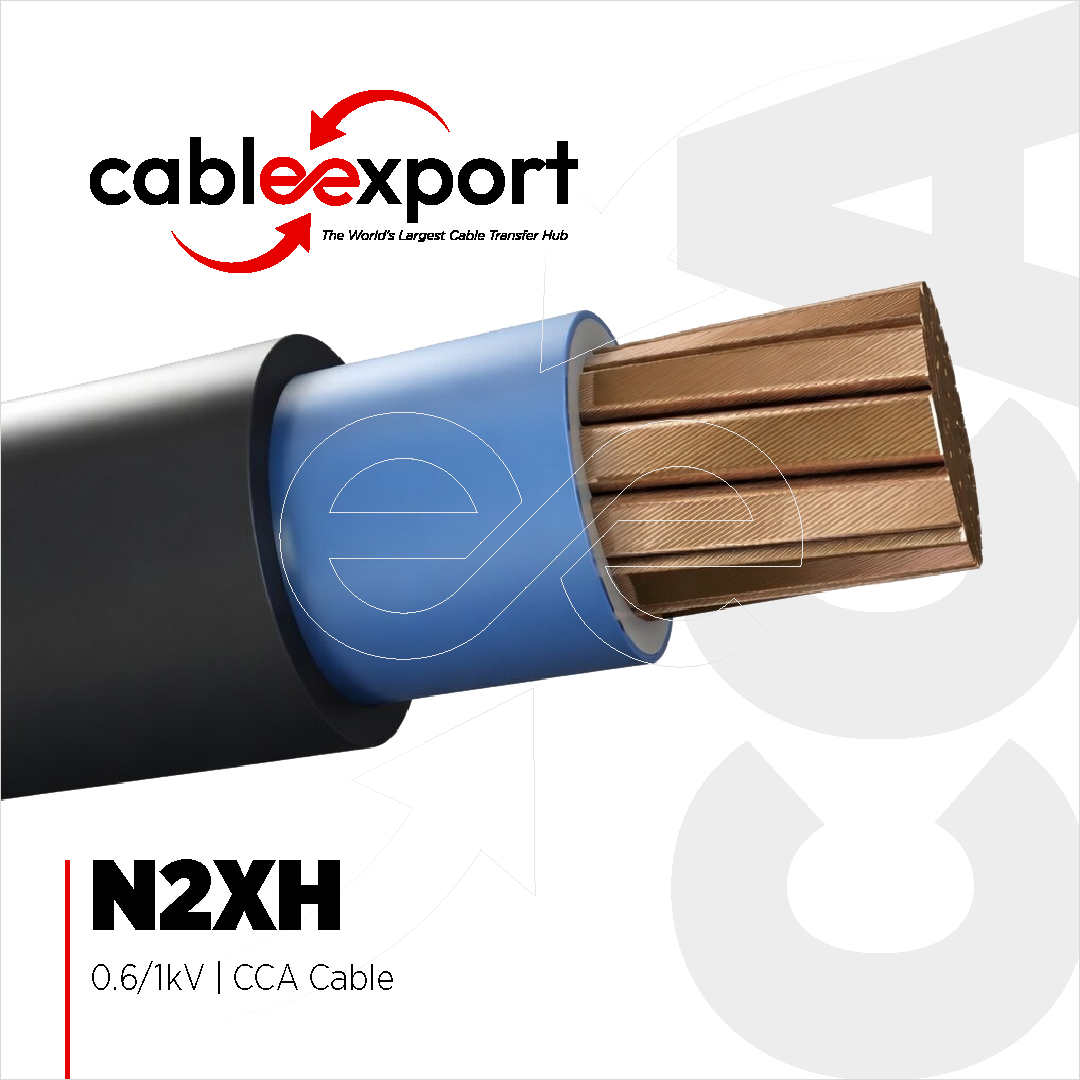
The N2XH 1×50 mm² 0.6/1kV power cable is engineered for fixed installations where high safety requirements regarding fire performance are mandated. Featuring halogen-free, low-smoke, and non-corrosive properties, this single-core cable utilizes cross-linked polyethylene (XLPE) insulation over a copper conductor. It is designed to ensure operational continuity and safety in critical infrastructure projects, commercial buildings, and industrial facilities by preventing the propagation of flames and limiting the emission of toxic gases and corrosive acids.
Key Technical Specifications
Manufactured strictly in compliance with recognized international and regional standards, the N2XH 1×50 mm² cable delivers precise electrical and mechanical parameters for professional procurement and engineering deployment.
| Conductor Type | Single or Multi-wire Copper Conductor |
| Nominal Cross-Section | 1×50 mm² |
| Rated Voltage (U0/U) | 0.6/1 kV |
| Insulation Material | XLPE |
| Outer Sheath / Properties | Halogen-Free, Flame Retardant (LSZH) |
| CPR Fire Classification | Cca-s1, d2, a1 |
| Manufacturing Standard | TS HD 604 S1 |
Applications & Installation
This cable is primarily utilized in power networks, underground installations, cable ducts, power and switching stations, and industrial plants. Due to its Low Smoke Zero Halogen (LSZH) characteristics, it is heavily specified for indoor environments, public buildings, transport terminals, hospitals, high-rise complexes, and areas where human life and sensitive equipment must be protected against fire hazards and dense smoke accumulation. Standard installation practices for low-voltage power cables apply, observing the minimum bending radius and pulling tension limits defined by the manufacturer.
Standards & Compliance
The N2XH 1×50 mm² 0.6/1kV cable complies with TS HD 604 S1 specifications. It meets stringent Construction Products Regulation (CPR) requirements, achieving a Cca-s1, d2, a1 classification, which guarantees superior performance regarding flame propagation, heat release, smoke production, and acidity of combustion gases.